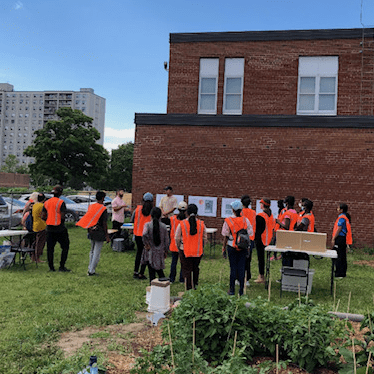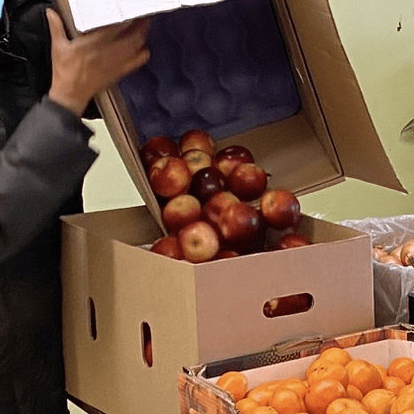
Community care was…just to check on each other, help each other, share information, all that kind of stuff…Community care [was] old fashioned telephone trees, wellness checks, putting out the word to our community, that if you and your partner or partners are needing stuff, please ask, it is okay to ask.
– Participant 96
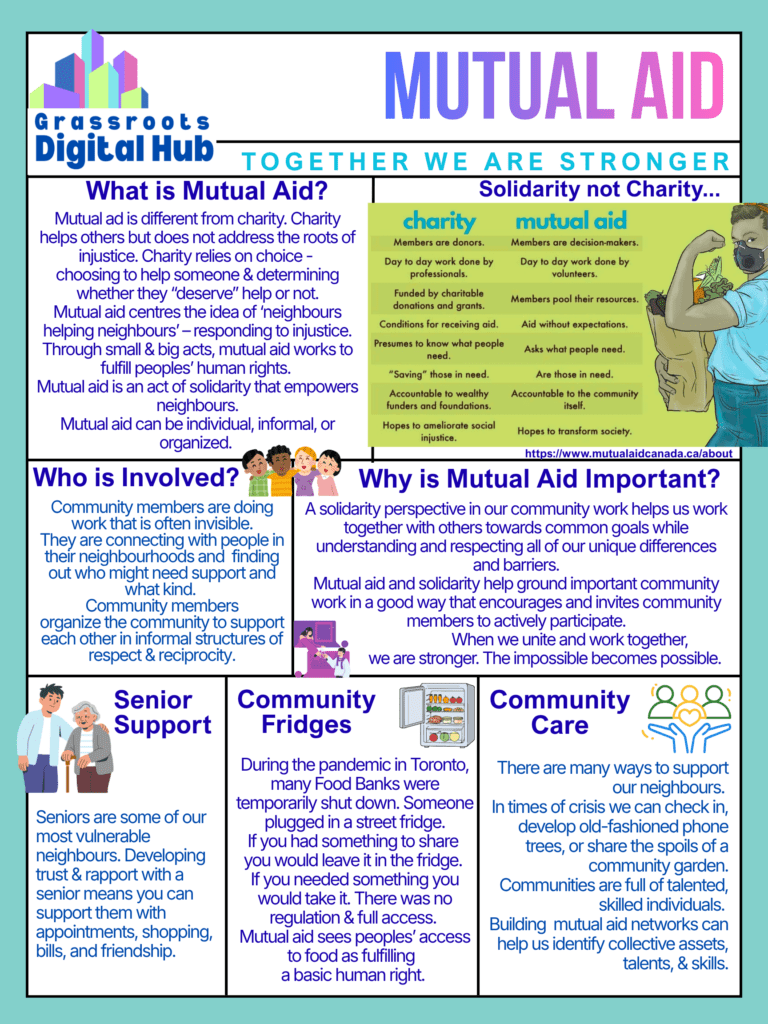
Grounding important grassroots work in understanding of mutual aid and solidarity can help a community overcome barriers, personal differences, and potential conflict when working together.
Mutual aid centres the idea of ‘neighbours helping neighbours’ – especially when governments fail.
A solidarity perspective in our community work helps us work together with others towards common goals while understanding and respecting all of our unique differences and barriers.
Mutual aid and solidarity that can help ground your important community work in a good way that encourages and invites community members to actively participate.
When we unite and work together, we are stronger and the impossible becomes possible.
We wanted to provide meals. Some of the residents it came out of their own pockets. And you were able to have meals and all that stuff from somebody else’s home. We went in their home, [gathered] their home cooked meals, and …[went] out… and distributed these meals out into the community
– Participant 10
So… for seniors… if they need it…we purchase medication, whatever we can get in the grocery that’s available. We call them just to make sure what do they need…
– Participant 12
To learn more about mutual aid, check out our infographic.
More resources
- The Commons (Social Change Library) has a number of interesting resources on aspects of community building work including this introduction to Mutual Aid.
- Community Fridges TO is a Toronto-based mutual aid initiative created to nourish our communities and our neighbours. We firmly believe access to food is a right, not a privilege.
- Mutual Aid Canada is a hub across the country promoting mutual aid connections an act of solidarity between individuals.
- Shareable is a US based organization that offers educational tools on re-imagining the world from cooperative models including mutual aid. Shareable offers a different vision of the world – one where people power challenges corporate power building alternative government and economic models.
- Strengthening Civil Society Work: Mutual aid with Dean Spade and anti-war hub.
- Summary of Dean Spade’s Mutual Aid: Building Solidarity During Crisis (PDF).
- The ‘Skills for Crisis’ project acknowledges that ecological tipping points, social collapse and multiple crises have been reached. They will be and already are our reality. The website explores how people and communities can act in solidarity in response to the crisis.
- The Bike Brigade is a mutual aid bike delivery collective working across the City of Toronto with a number of different organizations and agencies. Its work centres on values of solidarity, reciprocity and community care. They state, “Our work was – and continues to be – a response to the state abandonment of vulnerable community members in the city.”